
Criminal Court Cases in Grant County
Grant County criminal cases divide between two Kentucky trial courts. Grant District Court handles misdemeanors, traffic matters, violations, and the first stages of felony cases. A felony may start there with a complaint, initial appearance, bond decision, and preliminary hearing. After a grand jury returns an indictment, the prosecution moves to Grant Circuit Court for arraignment, motions, trial or plea, judgment, and sentence. This split matters because a person may have entries in both court divisions for one course of events.
The Office of Circuit Court Clerk serves both divisions at the Grant County Judicial Center, 224 South Main Street in Williamstown. The official Grant County court page lists Circuit Court at 859-824-4467 and District Court at 859-823-5251. The Grant County counter is open weekdays from 8:30 a.m. to 4 p.m. The clerk is the right custodian for pleadings, docket entries, orders, and certified copies. Police reports stay with the agency that made them, while booking records stay with the detention center.
Choose the Right Grant County Court
Begin with the type and stage of the Grant County charge. A misdemeanor, traffic citation, violation, or felony complaint points first to District Court. An indictment, felony plea, or felony sentence points to Circuit Court. When that distinction is unknown, give the Grant County clerk the full name and approximate year and ask which division holds the file. The docket can also reveal a linked case number in the other division.
An indictment is only a formal accusation approved by a grand jury. It does not establish guilt. Likewise, an early booking description may change when the prosecutor files a complaint or when a grand jury returns charges. For a complete account, compare each count's filed charge and final disposition instead of relying on the label from intake. The broader Grant County Arrest Search explains the earlier agency and booking records that may lead into the court file.
Note: Kentucky has a unified court system, so Williamstown, Dry Ridge, and Corinth do not maintain separate municipal criminal-court portals.
Grant County Case Record Searches
A known Grant County file is best traced through the Grant County clerk. A broader statewide name check is available through the Kentucky Court of Justice Administrative Office of the Courts. FastCheck requires registration, while a One-Time Request is delivered by U.S. mail. Those products are court-record reports, not fingerprint-based criminal histories, and exclude juvenile, mental-health, and domestic-violence case types.
- Collect the full name, approximate filing year, date of birth if the clerk accepts it, and any case number.
- Call or visit the Grant County clerk and ask whether the matter belongs to District or Circuit Court.
- Request the register or docket first, then identify the pleadings, orders, or judgment that answer the question.
- Use AOC FastCheck or One-Time Request when a statewide court-record report is more useful than one local file.
- For an archived file, obtain its case and locator numbers before contacting the State Records Center.
The AOC background-check page shows the public report channels.
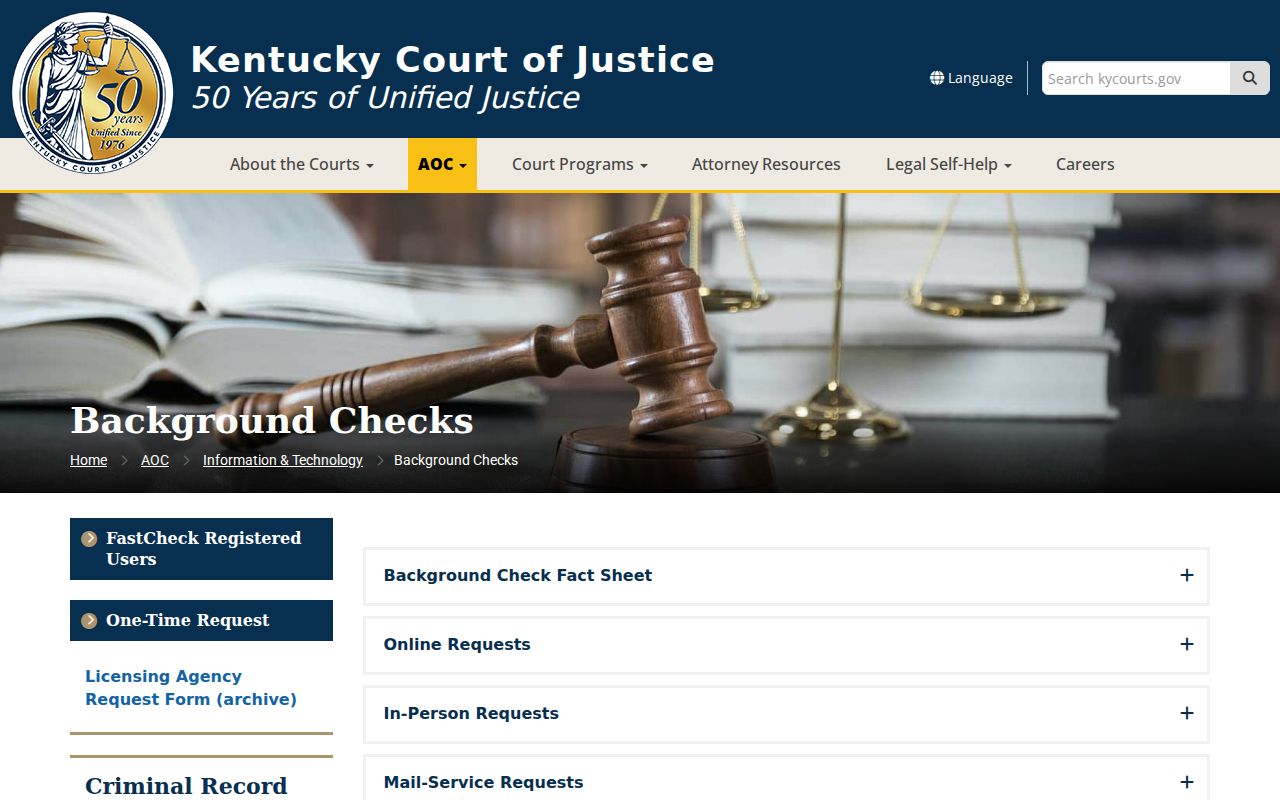
This screen helps separate the paid statewide report from a request for documents in a specific Grant County case.
Grant County FastCheck Search Inputs
FastCheck and the mail option depend on identity details supplied by the requester. Public landing pages may change their exact field labels, but the order needs enough detail to distinguish people with similar names. AOC reports cover felonies back to 1978 and misdemeanor or traffic cases for at least five years. They do not include federal cases, and a record match causes AOC to notify the subject and send that person a copy.
| Search detail | Use | Required status | Format note |
|---|---|---|---|
| Full legal name | Primary identity search | Core input | Include known prior names when the order permits |
| Date of birth | Distinguishes similar names | Form dependent | Use the portal's date format |
| Case number | Locates one known case | Not needed for name report | Most useful at the clerk counter |
| County and court | Narrows local inquiry | Request dependent | Choose Grant and the proper division |
| Filing year | Helps find older files | Useful | Approximate year may help the clerk |
Current report pricing should be checked in the order interface. Older AOC material lists $25, but that older figure should not be treated as the live price without confirmation.
What a Criminal Case File Contains
A Grant County case file records what occurred after a matter reached court. The register or docket is the best index because it places hearings, filings, warrants, pleas, and orders in date order. A docket listing does not always provide a downloadable image. Ask the clerk for a copy when the underlying complaint, indictment, motion, judgment, or sentencing order is needed.
| Case number and court | Identifies Grant County, division, case type, filing year, and the specific action. |
|---|---|
| Charging document | Shows the complaint, citation, or indictment and the law cited for each count. |
| Docket entries | Lists filed papers, hearings, warrants or capias events, and judicial orders in sequence. |
| Hearing dates | Records arraignment, pretrial, motion, trial, and sentencing settings and results. |
| Disposition and judgment | States the result for each count, including conviction, dismissal, or acquittal. |
| Sentence and conditions | May state custody, probation, fines, costs, restitution, and other court terms. |
Protected identifiers, juvenile information, and victim or minor details should not appear in public copies.
Grant County Clerk Counter Workflow
The Kentucky court-record request instructions direct readers to the local circuit clerk for current records. Ask for the docket before ordering a large file. It shows which items exist and avoids paying for pages that do not answer the question. Copy, certification, archive, and search fees are not published on Grant County's court page, so request a quote first.
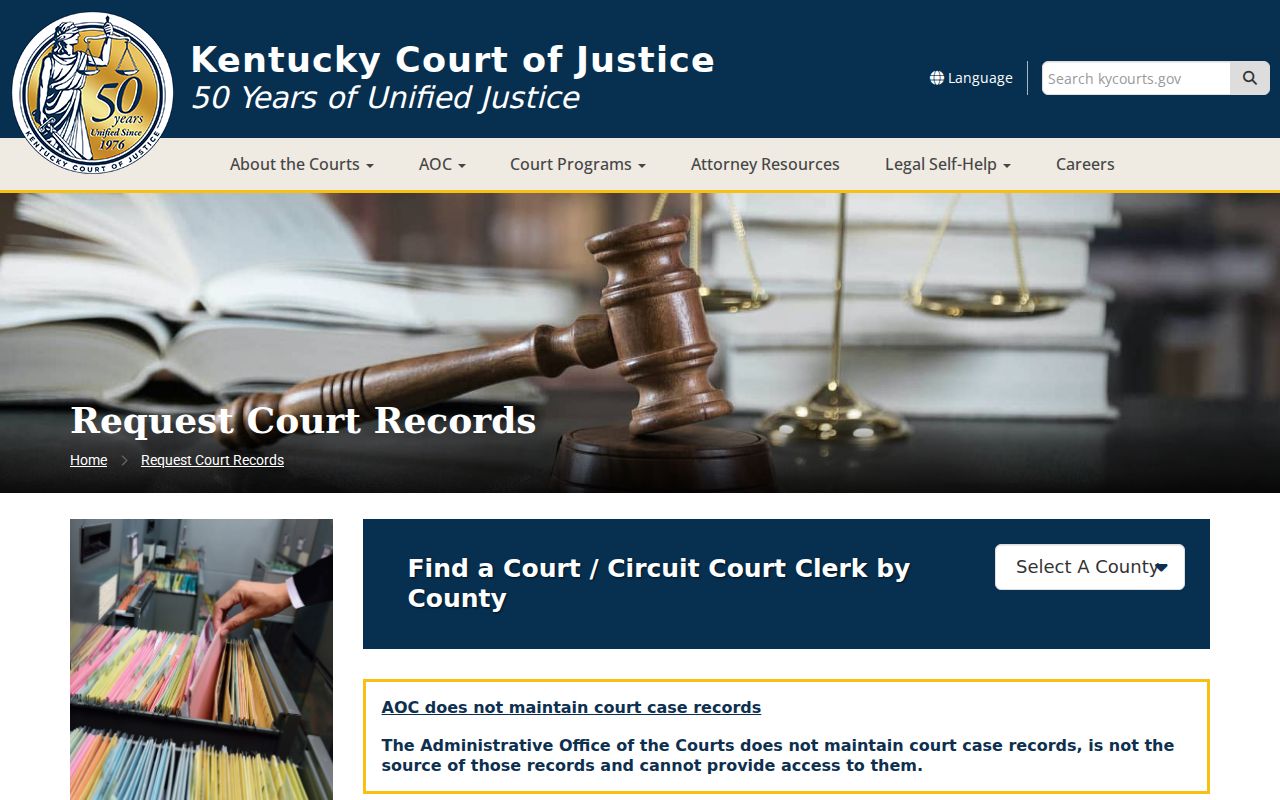
The state instructions reinforce that current Grant County court records start with the Williamstown clerk, while archived files need a locator number.
If a file has moved to the State Records Center, first get both the case number and locator number from the clerk. State staff cannot search by a person's name or Social Security number. With those identifiers, use state.records@ky.gov or call 502-564-3617. Published payment methods for court obligations do not establish the fee or payment rule for record copies.
Criminal Case Stages in Grant County
A Grant County criminal case changes shape as it moves through the courts. District Court handles the first judicial steps even when the allegation may become a felony prosecution. The prosecutor may alter or decline a charge. A grand jury may indict or return no true bill. If indicted, Circuit Court opens the felony phase, takes a plea, resolves motions, and reaches trial or a negotiated result.
Case flow: Charges Filed › Arraignment › Pretrial › Plea or Trial › Disposition › Sentencing
Read each count on its own. One case may contain a conviction on one count and a dismissal on another. “Pending” means no final result is recorded. “Nolle prosequi” means the prosecutor chose not to continue that charge at that time. An acquittal is a not-guilty result. These terms say more than the fact that a hearing or booking occurred.
Grant County Disposition Vocabulary
Short docket terms can hide major differences in outcome. Grant County court records use Kentucky's statewide case framework, so the same core terms appear in both local files and AOC reports. Reading them in context prevents an accusation from being mistaken for a judgment.
- Complaint
- A sworn allegation that starts a criminal matter.
- Indictment
- A grand jury's formal felony accusation, not proof of guilt.
- Disposition
- The outcome of a count, such as conviction, dismissal, or acquittal.
- Capias
- Court process that directs an arrest or appearance.
- Recognizance
- Release based on a promise and conditions rather than a cash deposit.
The Kentucky legal forms catalog provides official forms used across the court system.
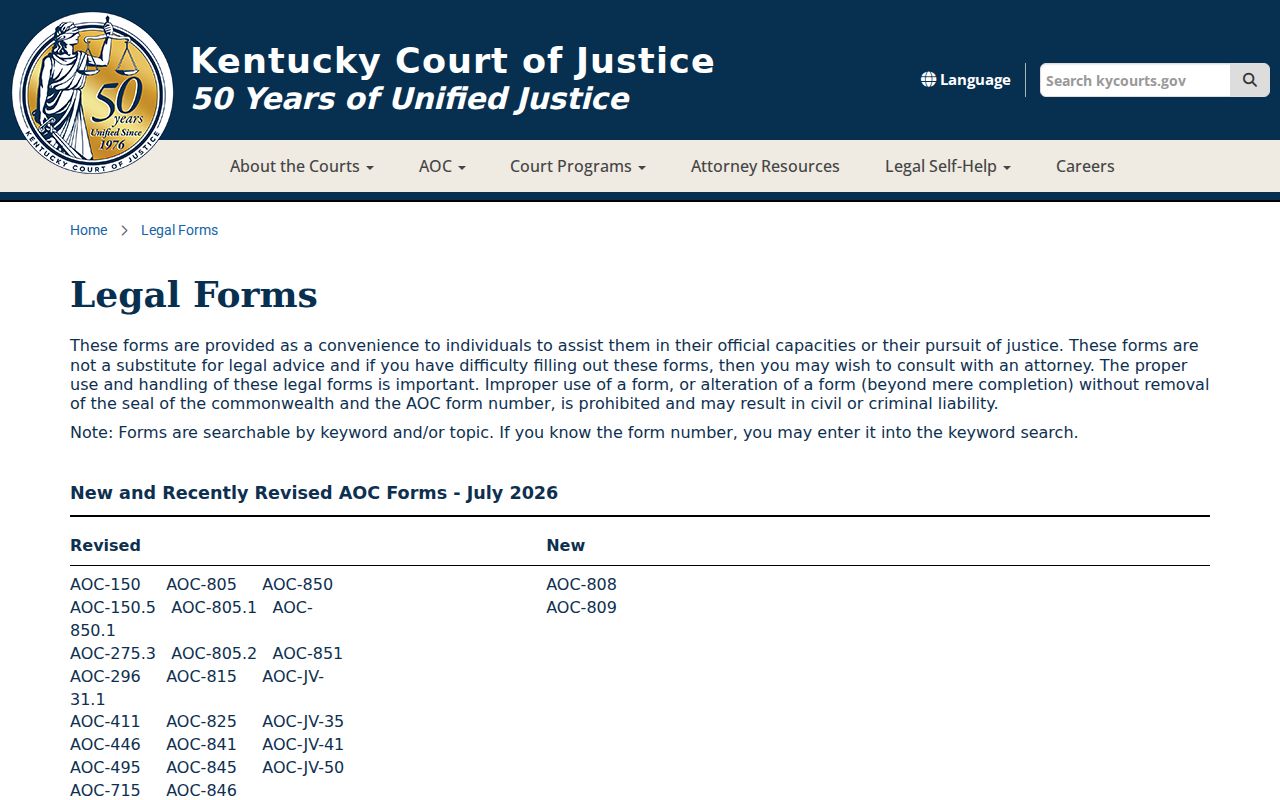
The forms page is useful when a docket references a filing by form number but the public register does not show the document itself.
Grant County CourtNet Data Limits
CourtNet is Kentucky's unified case-management system, but it is not a free public browser that exposes every document to anyone. Public name-based reports run through FastCheck, while direct case access runs through the clerk. Authenticated eCourt or CourtNet functions largely serve court professionals. That division explains why a person may find a statewide report yet still need the Grant County clerk for the complaint or judgment.
The AOC analytics and CourtNet data page describes the statewide court-data layer.
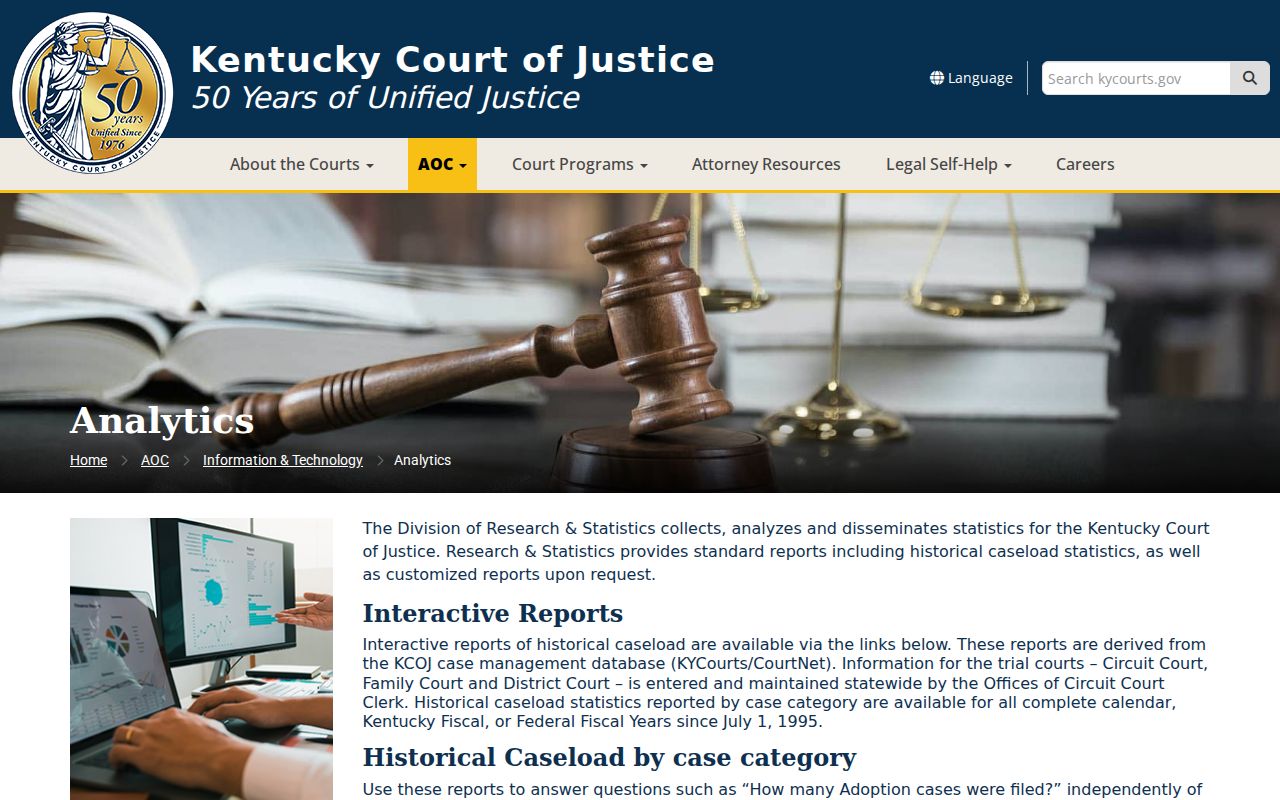
Statewide counts and data tools help with court context, but they do not replace the signed orders and docket for one Grant County prosecution.
Federal cases are another limit. Grant County lies in the Eastern District of Kentucky, and federal criminal dockets are obtained through PACER. They do not appear in AOC FastCheck or the Grant Circuit Clerk's file.
Access Rules for Case Records
Kentucky court access begins with a presumption that ordinary adult case records can be inspected, but not every item is public. Juvenile, mental-health, and domestic-violence case types are excluded from AOC public criminal-record reports. Social Security numbers, protected victim data, minor identifiers, and other private details are redacted. Sealed warrants, expunged cases, and active investigative material may also be absent or restricted.
The Kentucky Open Records Act, KRS 61.870 through 61.884, governs agency records, while court access also follows judiciary rules. KRS 17.150 permits limits on investigative reports while prosecution is pending. If the docket does not appear, ask the clerk whether the case is archived, sealed, expunged, confidential, filed in another division, or indexed under a different name.
The Kentucky expungement page explains how eligible records may be cleared.
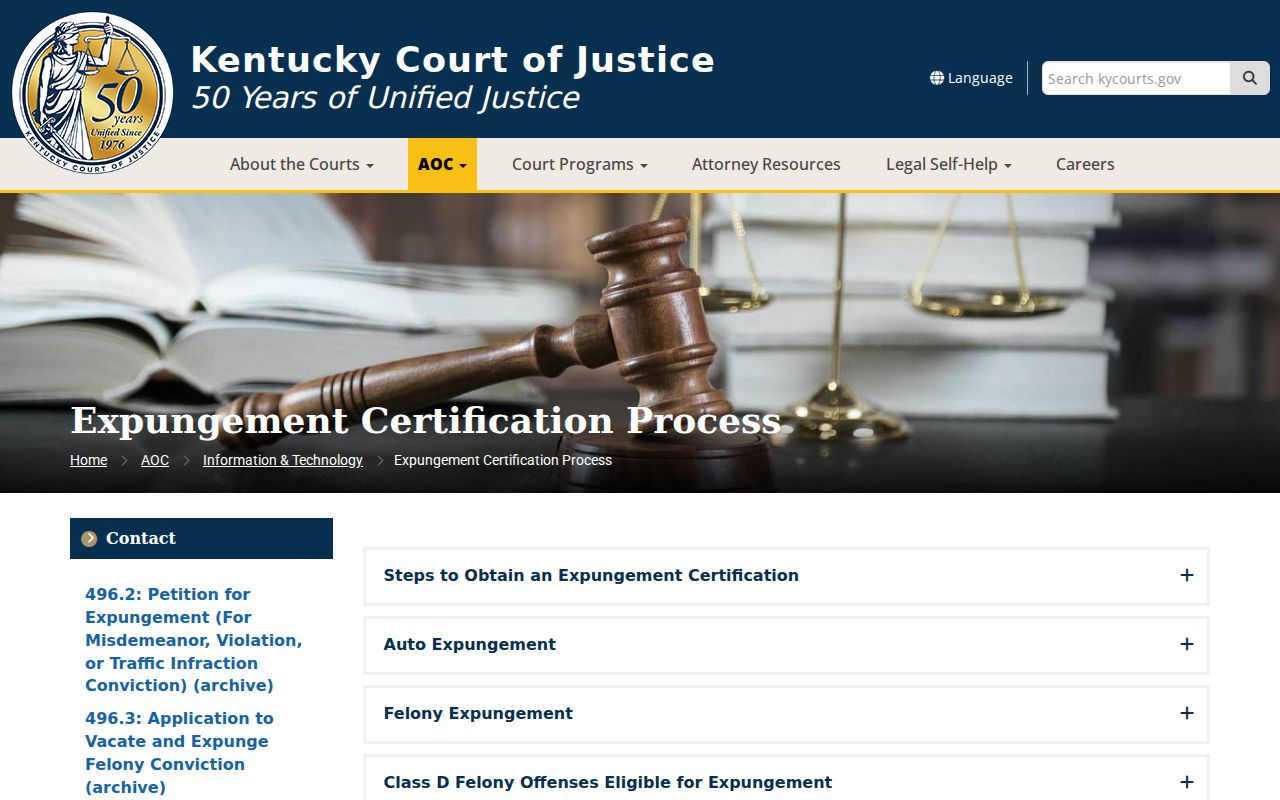
Once qualifying relief is ordered and all required court payments are complete, covered records are removed from official systems under Kentucky procedure.